
TISCOMED

2026 Best Operation Theatre Surgical Light for Hospitals

Selecting the 2026 Best Operation Theatre Surgical Light requires more than comparing brightness, price, or product photographs. Hospitals need stable illumination, controlled shadows, accurate colour rendering, low heat, and dependable movement during long procedures. A poorly balanced light can force surgeons to adjust their posture repeatedly. That small problem may become a serious fatigue factor.

The global surgical lights market is expanding. MarketsandMarkets projects continued growth through 2029, driven by hospital construction, operating-room modernization, and LED replacement demand. Fortune Business Insights also identifies LED efficiency, digital controls, and minimally invasive surgery as important market drivers. These reports show opportunity, not automatic quality. Every specification still needs clinical validation.

Look closely.

The best Operation Theatre Surgical Light should support high colour rendering, typically with an R9 value that preserves red-tissue visibility. It should maintain illumination when the surgeon’s head or instrument interrupts the beam. It should also provide sterile-handle control, smooth positioning, emergency backup, and documented compliance with IEC 60601-2-41. AORN guidance further emphasizes visibility, infection prevention, and safe operating-room workflow.

Lighting specialist Dr. James Benya has stated, “Good lighting is not simply about making a space brighter; it is about making visual tasks easier and safer.” That principle matters in surgery, where a bright field can still contain glare, reflection, or distracting shadows. Manufacturers may promise perfection. Hospitals should remain skeptical.

This guide compares optical performance, ergonomics, serviceability, energy use, and lifecycle reliability. It also considers installation height, ceiling structure, sterile workflow, and surgeon feedback. One weakness remains: published laboratory data cannot fully reproduce every surgical team’s experience. Real operating rooms are messier. Practical trials are essential.
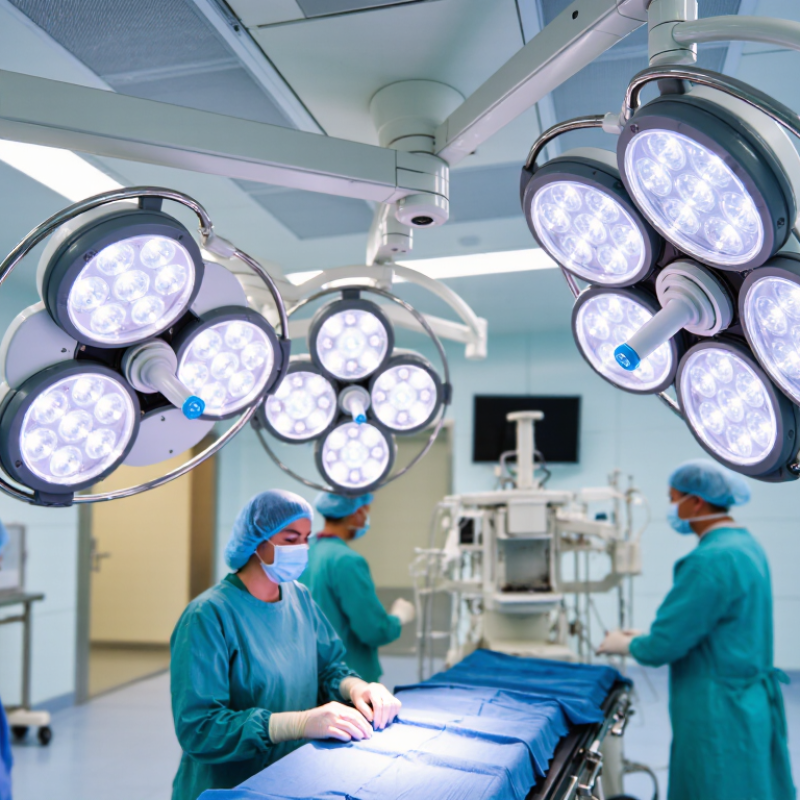
2026 Best Operation Theatre Surgical Light for Hospitals

What Is an Operating Theatre Surgical Light?

An operating theatre surgical light is a medical luminaire designed to illuminate a patient’s surgical field without harsh shadows. It differs from ordinary ceiling lighting. Its optical system supports stable brightness, focused beams, and accurate tissue colors. In real theatre workflows, surgeons often reposition the light several times during deep procedures. That small movement can affect concentration.

IEC 60601-2-41:2021 specifies surgical luminaire performance within an illuminance range of approximately 40,000 to 160,000 lux, depending on configuration. High color-rendering performance is also essential. Red tissue, pale vessels, and subtle bleeding must remain visually distinct. The World Health Organization reports that surgical site infections affect about 11% of surgical patients in low- and middle-income countries. A surgical light cannot prevent infection. However, poor visibility may complicate careful handling and wound assessment. This connection deserves more clinical study.

Tips: Check illuminance at the working distance, not only on the product sheet. Test shadow control with hands, instruments, and a deep cavity model. Review glare, heat, cleaning access, emergency backup, and sterile-handle design. A perfect light does not exist. Even advanced systems may create shadows when several staff members stand close together. Hospitals should involve surgeons, nurses, biomedical engineers, and infection-control teams before approval.

Key Features of the Best Surgical Lights for Hospitals in 2026

The best operation theatre surgical light for hospitals in 2026 must support clear, stable visualization throughout long procedures. WHO’s Global Guidelines for the Prevention of Surgical Site Infection report that surgical site infections affect about 11% of patients in low- and middle-income countries. Cleanability therefore matters as much as brightness. A sealed, smooth housing reduces dirt traps. Removable sterile handles should withstand repeated disinfection without becoming loose.

Illumination should remain consistent when staff move around the operating field. IEC 60601-2-41 addresses essential safety and performance requirements for surgical luminaires, including illumination and heating considerations. Hospitals should compare measured lux, color rendering, color temperature, and shadow control rather than trusting marketing claims. High color rendering helps clinicians distinguish tissue tones. Adjustable color temperature can support different procedures. Yet excessive brightness may increase eye fatigue.

Heat management is often underestimated. A cool light head improves comfort during extended operations, especially under protective clothing. Touch controls, wall controls, and sterile handle controls should respond quickly with gloved hands. Battery backup can protect critical visibility during short power interruptions, but its runtime needs real-world testing. Do not assume the specification sheet tells the whole story. Test movement, cleaning, glare, noise, and maintenance access in a simulated theatre. No light is perfect. A practical choice may still involve compromises. WHO’s 2022 Global Report on Infection Prevention and Control also stresses reliable systems, training, and monitoring, not equipment alone.

How to Compare Surgical Light Performance and Safety

When comparing surgical lights for a hospital, do not judge brightness alone. In a practical operating-room evaluation, measure illuminance at the wound, not only at the ceiling. Check shadow dilution when two surgeons, heads, and instruments block the beam. A strong light should maintain a stable field without forcing staff to reposition it repeatedly.

Color quality also matters. Compare color rendering, especially red tones, tissue contrast, and adjustable color temperature. Review the stated performance at different distances and beam sizes. Some lights appear impressive in a showroom but lose useful intensity over a deeper cavity. Ask for test data under realistic conditions. The room is not a showroom.

Safety requires equal attention. Inspect sterile handles, sealed surfaces, smooth movement, and controls that reduce accidental touch. Verify heat near the surgical field, electrical protection, cleaning compatibility, and backup operation during power interruptions. The product documentation should identify applicable medical-device standards, testing methods, and maintenance intervals. Hospitals should also confirm installation requirements with qualified clinical engineering staff.

A useful comparison includes glare, noise, arm balance, and emergency access. These details affect fatigue during long procedures. A light may perform well technically yet frustrate surgeons because its controls are poorly placed. I would record observations from surgeons, nurses, and maintenance teams, then compare them with measured data. No score is perfect. Human feedback can be inconsistent, but ignoring it creates a different risk. Recheck the evaluation after installation, because real surgical workflow often exposes weaknesses that specifications miss.

2026 Best Operation Theatre Surgical Light for Hospitals - How to Compare Surgical Light Performance and Safety

Evaluation Dimension Recommended Hospital Benchmark Why It Matters in the Operating Theatre How to Verify Relevant Safety or Quality Reference
Central Illuminance At least 100,000 lux at the specified working distance; adjustable output is preferred. Provides sufficient illumination for tissue differentiation and detailed surgical work without relying on excessive ambient lighting. Measure with a calibrated lux meter at the manufacturer’s stated working distance and at the lowest and highest output settings. IEC 60601-2-41 test and performance requirements for surgical and diagnostic luminaires.
Illumination Depth A useful depth of field of approximately 600 mm or more, with limited drop-off through the field. Maintains visibility in deep cavities and reduces the need to reposition the light during procedures. Review the photometric report and confirm illuminance at multiple depths rather than relying only on the peak lux value. Manufacturer photometric documentation and IEC 60601-2-41 evaluation methods.
Colour Rendering General colour rendering index (Ra/CRI) of 95 or higher; high R9 performance is preferred for saturated red tissue tones. Accurate colour representation supports recognition of tissue condition, blood, vessels and subtle anatomical differences. Request a test report showing Ra and individual colour-rendering values, including R9, at the selected colour-temperature setting. CIE 13.3 colour-rendering methodology and manufacturer photometric data.
Correlated Colour Temperature Adjustable range of approximately 3,500–5,000 K, with stable colour output during dimming. Allows clinicians to select a comfortable visual balance for different procedures and tissue types. Check the measured CCT at minimum, medium and maximum intensity; confirm that dimming does not cause unwanted colour shifts. Photometric test report; colour stability should be assessed across the complete dimming range.
Shadow Management Multi-emitter optical design with measured shadow dilution under partial obstruction; avoid relying on a single central light source. Reduces loss of visibility caused by the surgeon’s head, hands, instruments or other equipment. Compare test results with defined obstruction conditions and inspect performance at different field sizes and arm positions. IEC 60601-2-41 shadow-dilution and field-performance testing.
Light Field Diameter Adjustable illuminated field, commonly covering approximately 180–300 mm depending on the working distance. A controllable field helps focus light on the incision while limiting unnecessary glare and illumination of surrounding areas. Measure the field diameter at the stated working distance and confirm that field adjustment is possible without large intensity changes. Manufacturer photometric specifications and IEC 60601-2-41 measurements.
Thermal Performance Low radiant heat at the surgical field and no uncomfortable temperature rise during continuous operation. Limits tissue drying, reduces staff discomfort and helps maintain a stable operating environment. Review measured irradiance and temperature data after continuous operation at maximum output; confirm compliance with applicable limits. IEC 60601-2-41 optical radiation and thermal-performance requirements.
Dimming and Controls Smooth, flicker-free dimming with clearly identifiable controls and a sterile or non-contact control option. Enables rapid adjustment without interrupting the sterile workflow or causing visual distraction. Test dimming at all levels, inspect for visible flicker on camera and confirm operation with sterile gloves. IEC 60601-1 usability and essential-performance principles; site infection-control policy.
Sterilizable Handles and Cleaning Removable, autoclavable sterile handles plus smooth, sealed surfaces compatible with the hospital’s approved disinfectants. Supports aseptic technique and reduces areas where biological contamination can accumulate. Confirm autoclave instructions, chemical compatibility, ingress protection and availability of replacement handles and seals. Hospital infection-prevention requirements and validated cleaning instructions.
Mechanical Movement Balanced articulated arms, smooth positioning, reliable brake performance and sufficient vertical and lateral reach for the theatre layout. Reduces accidental movement, collision risk and staff effort when repositioning the luminaire. Perform repeated positioning, brake-hold and collision-clearance tests under the planned ceiling height and equipment configuration. IEC 60601-1 mechanical safety requirements and site-specific installation risk assessment.
Electrical Safety Medical electrical equipment certification for the target market, protective earthing or approved double insulation, and documented leakage-current testing. Reduces the risk of electric shock, equipment failure and interference with other critical devices. Request the declaration of conformity, test certificates, installation requirements and preventive-maintenance test procedure. IEC 60601-1 general basic safety and essential-performance requirements.
Electromagnetic Compatibility Documented immunity and emissions compliance for the hospital’s electrical and wireless environment. Helps prevent interference with anaesthesia systems, patient monitors, imaging equipment and communication devices. Review EMC test results and evaluate the complete installed system, including control panels, cameras and network connections. IEC 60601-1-2 electromagnetic compatibility requirements.
Power Continuity Connection to the hospital emergency-power system, with automatic restart or backup-lighting provisions appropriate to the clinical risk assessment. Maintains visibility during mains interruptions and supports safe continuation or controlled suspension of a procedure. Simulate mains failure and restoration; verify restart behaviour, alarm indication and compatibility with the theatre UPS or emergency circuit. IEC 60601-1, local electrical codes and hospital emergency-power policy.
Preventive Maintenance Documented inspection schedule covering electrical safety, arm brakes, fasteners, controls, illumination and cleaning damage. Regular verification helps preserve optical output and identifies mechanical or electrical deterioration before failure. Confirm service intervals, spare-parts availability, calibration requirements, training and local technical support. Hospital medical-equipment management procedures and applicable national regulations.

Procurement note: Benchmark values are typical evaluation targets for modern hospital surgical lights, not universal legal limits. Final acceptance should be based on the applicable edition of IEC 60601-1, IEC 60601-1-2, IEC 60601-2-41, local regulations, the hospital’s risk assessment and verified test reports.

Installation, Maintenance, and Operating Requirements

A reliable operating theatre surgical light depends on careful installation, not only strong illumination. Qualified technicians should inspect the ceiling structure, electrical supply, grounding, and emergency power connection before mounting. The light must move smoothly without drifting, while sterile handles should remain reachable from the surgical field. Test illumination at several angles and working distances. Shadows can appear after installation, especially around large surgical teams.

Maintenance should follow the manufacturer’s technical schedule and the hospital’s infection-control policy. Staff should clean external surfaces with approved, non-abrasive disinfectants after each procedure. Harsh chemicals may damage lenses, seals, or touch controls. Inspect joints, cables, switches, and protective covers regularly. Record faults, cleaning dates, and service actions in a maintenance log. Small movement resistance matters. It may signal a developing mechanical problem, even when the light still operates.

Tips: Assign one trained person to check the light before each operation. Confirm brightness, focus, arm stability, and backup power. Keep sterile handles covered when required. Never force a stiff arm or ignore flickering. A practical checklist is useful, but it cannot replace professional inspection. In real hospitals, rushed checks sometimes miss loose fittings, so periodic review of the checklist is also necessary. Personnel should receive documented training before operating the system, including safe positioning, adjustment, and failure procedures. Test backup functions during scheduled maintenance, not during surgery.

How to Choose the Right Surgical Light for Your Hospital

Choosing the right surgical light begins with workflow, not brightness alone. The WHO Global Surgery 2030 report estimated 313 million surgical procedures worldwide each year. That scale makes dependable visualization essential. Interview surgeons, anesthetists, and nurses before writing specifications. Observe deep cavities, reflective instruments, and awkward table positions. Measure the room.

IEC 60601-2-41 provides a useful technical reference, with surgical illumination commonly evaluated around 40,000–160,000 lux. Many hospital procurement teams also request a color rendering index above 90, especially for tissue differentiation. Check shadow dilution, beam depth, color temperature, heat output, and sterile control options. A 160,000-lux lamp is not automatically better. Excessive intensity may create glare on wet instruments or fatigue during long procedures.

Reliability requires more than a showroom demonstration. WHO’s Global Patient Safety Report 2024 states that approximately one in ten patients experiences harm in healthcare, with more than half considered preventable. A poorly positioned light can contribute to delays, shadows, or repeated adjustments. Test the fixture in a full operating room, with staff wearing gloves and masks. Inspect cleaning access, emergency power, ceiling load, battery behavior, and maintenance records. I would not trust one impressive demonstration. Real procedures are messier. A specification can still miss the surgeon’s actual hand position. Perform a trial during representative cases, then revise the purchase requirements.