TISCOMED

7 Best Medical Trolley Manufacturers for Hospitals?

Choosing the right medical trolley affects medication safety, workflow, infection control, and staff comfort. Hospitals need more than attractive colors or a low purchase price. They need equipment that performs reliably during crowded rounds, urgent transfers, and long shifts.

This guide examines seven leading medical trolley manufacturers for hospitals. The comparison considers drawer configuration, locking systems, load capacity, castor performance, cleaning access, customization, warranty support, and documented quality procedures. It also considers real working details, such as whether a nurse can open a drawer with one hand, identify supplies under dim lighting, or move the trolley across uneven flooring. A polished brochure proves little.

Patient-safety scholar James Reason stated, “We cannot change the human condition, but we can change the conditions under which humans work.” That principle fits medical trolley selection closely. A well-designed trolley reduces searching, reaching, interruptions, and avoidable confusion. It cannot solve every clinical problem. It can still make a critical moment more controlled.

The manufacturers discussed here serve different hospital needs. Some focus on emergency crash carts. Others emphasize modular storage, anesthesia support, digital access control, or compact designs for smaller wards. Their strengths are not identical. Buyers should verify local service coverage, replacement-part availability, cleaning compatibility, and independent product documentation before signing a contract. This review is practical, but no ranking remains perfect for every hospital. Procurement teams should test shortlisted models in a real ward, with actual staff, supplies, and floor conditions.
7 Best Medical Trolley Manufacturers for Hospitals?

What Medical Trolleys Are and Why Hospitals Need Them

What Medical Trolleys Are and Why Hospitals Need Them

Medical trolleys are mobile units that organize supplies, instruments, records, and essential equipment near the patient. They may include locking drawers, adjustable shelves, waste compartments, and smooth casters. In a busy ward, this design reduces repeated trips to storage rooms. It also keeps frequently used items visible, clean, and easier to check.

Small details matter. A trolley with clear labels helps staff find dressings quickly during wound care. Sealed drawers can reduce dust exposure, while brakes prevent movement beside a bed. The World Health Organization reports that approximately one in ten patients experiences harm during healthcare, and more than half of this harm is preventable. Trolleys cannot solve every safety problem. They can support safer routines when staff inspect contents and clean surfaces consistently.

Workflow evidence also deserves attention. The Agency for Healthcare Research and Quality identifies communication, teamwork, and clinical processes as important parts of hospital safety culture. A standardized trolley layout can support these processes by giving staff predictable access to supplies. However, overloading a trolley creates confusion and may obstruct movement. That weakness is easy to overlook. Hospitals should assess drawer height, infection-control requirements, load capacity, and emergency access before selecting a trolley. WHO patient-safety guidance emphasizes learning from system failures, not blaming individuals. Trolley checks, user feedback, and documented maintenance can turn a simple cart into a dependable clinical tool.

Medical Trolley Types Commonly Used in Hospitals

Typical storage configuration by clinical function. Actual specifications vary by hospital workflow and procurement requirements.

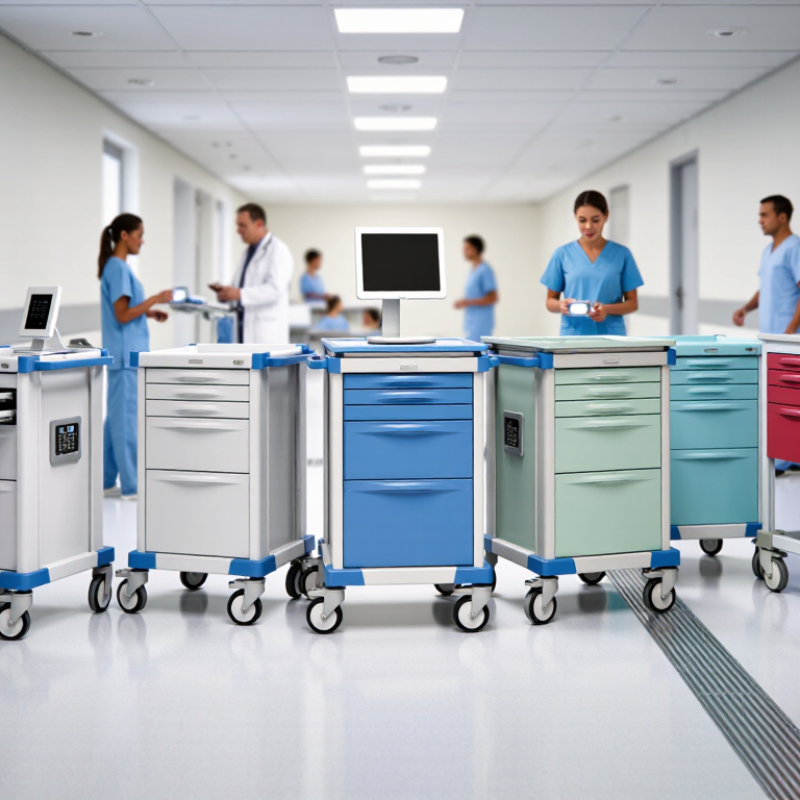
Medical trolleys help hospitals organize, transport, and secure supplies close to the point of care. Emergency carts generally prioritize rapid access to critical equipment, while medication, procedure, linen, and utility carts are designed around storage capacity, infection-control routines, and mobility.

Key Criteria for Evaluating Medical Trolley Manufacturers

Choosing among the 7 best medical trolley manufacturers for hospitals requires more than comparing prices. Key criteria begin with proven healthcare experience. A reliable manufacturer should understand medication rounds, emergency response, ward storage, and infection-control routines. Ask for documented product testing, material specifications, and user feedback from comparable hospitals. Small details matter. Smooth drawers, quiet casters, and clear labels can reduce delays during busy shifts.

Examine construction carefully. Powder-coated steel, medical-grade polymers, and sealed surfaces should tolerate repeated cleaning without cracking or trapping residue. The trolley must remain stable when fully loaded. Test it loaded. Check brake performance, corner protection, handle comfort, and drawer access from both sides. Adjustable layouts are useful, but complex fittings may slow daily work. A practical design often beats an impressive one.

Service quality also separates capable manufacturers from unreliable suppliers. Review warranty terms, spare-part availability, training, delivery records, and response times for repairs. Request traceable quality documents and clear maintenance instructions. Independent safety assessments can add confidence, especially for trolleys used near patients or sensitive equipment. Yet paperwork is not enough. A short ward trial may reveal awkward turning, poor visibility, or weak storage logic. No trolley is perfect. Even experienced teams can overlook how staff actually move during a crowded medication round. Feedback from nurses, technicians, and infection-control personnel should shape the final decision.

Seven Leading Medical Trolley Manufacturers for Hospitals

Choosing among the seven leading medical trolley manufacturers for hospitals requires more than comparing prices. Each manufacturer should demonstrate experience with real clinical workflows, infection control, and daily transport demands. A reliable trolley must move smoothly through narrow corridors, remain stable beside a patient bed, and support quick access during urgent care.

The strongest manufacturers usually offer several trolley designs for emergency care, medication delivery, procedure rooms, and laboratory transport. Look for sealed surfaces, rounded corners, lockable drawers, corrosion-resistant materials, and quiet medical-grade casters. Drawer labels should remain readable after repeated cleaning. Weight capacity also matters, especially when staff carry monitors, syringes, dressings, and waste containers together. Certification documents and traceable quality procedures add authority, but paperwork alone cannot prove practical performance.

Ask whether the manufacturer provides replacement parts, maintenance guidance, and staff training. A responsive service team can reduce downtime when a wheel or drawer mechanism fails. During evaluation, test the trolley on uneven flooring and around crowded corners. Small weaknesses become obvious there. No trolley is perfect. One model may offer excellent storage but feel too wide for older wards. Another may roll beautifully but lack enough secure compartments. Hospitals should record these compromises instead of trusting polished product claims. Feedback from nurses, technicians, and cleaning staff often reveals more than a showroom demonstration.

Comparing Product Design, Quality, Safety, and Service

7 Best Medical Trolley Manufacturers for Hospitals?

Comparing Product Design, Quality, Safety, and Service

Selecting a medical trolley requires more than checking its appearance or price. In hospital evaluations, practical design often reveals the real difference. A useful trolley should move smoothly through narrow corridors, fit beside a patient bed, and remain stable during sudden turns. Rounded corners reduce collision risks. Quiet casters matter during night rounds. Clearly labeled drawers also help staff find supplies without opening every compartment.

Quality depends on materials, construction, and daily performance. Stainless steel may suit procedure areas, while durable polymer can reduce weight in mobile units. Examine welds, drawer alignment, handle strength, and wheel brakes closely. A trolley that looks strong may still develop loose fittings after months of heavy use. Request load ratings and cleaning guidance. Test the drawers with gloved hands, because small design flaws become frustrating during urgent care.

Safety features should support consistent clinical routines. Secure locking systems, tamper-resistant compartments, and sealed surfaces can protect stored supplies. Adjustable accessories should lock firmly, not drift during movement. Service quality deserves equal attention. Reliable manufacturers provide replacement parts, clear warranties, maintenance instructions, and responsive technical support. On-site training can prevent avoidable damage. Still, no supplier is perfect. Hospitals should record recurring faults and review user feedback before making a large purchase.

7 Best Medical Trolley Manufacturers for Hospitals? — Comparing Product Design, Quality, Safety, and Service
Supplier ID Primary Product Focus Construction & Finish Typical Load Capacity Mobility & Ergonomics Safety Features Quality & Compliance Evidence Customization Capability Service & Support Profile
A Emergency and resuscitation trolleys Powder-coated steel frame with ABS or high-pressure laminate worktop; easy-clean surfaces Approximately 180–250 kg total trolley load 125 mm medical castors; two or four braking wheels; rounded push handle Central locking, tamper-evident seal, oxygen-cylinder holder, CPR board support Strong
Traceable materials, inspection records, and documented load testing
High: drawer layouts, accessories, color coding, and electrical modules Preventive-maintenance guidance and replacement parts commonly available
B Medication and treatment trolleys Aluminum or steel chassis with antimicrobial powder coating and impact-resistant panels Approximately 120–180 kg total trolley load 100–125 mm low-noise castors; adjustable accessory rails; ergonomic work height Individual or central drawer locks, removable trays, sharps-container bracket Strong
Documented cleaning compatibility and corrosion-resistance testing
Medium to high: drawer inserts, side shelves, waste bins, and IV poles Good technical documentation; service usually handled through regional partners
C Hospital procedure and instrument trolleys Stainless-steel or stainless-steel/ABS construction; welded or reinforced joints Approximately 150–220 kg total trolley load 125 mm swivel castors; two-wheel or four-wheel braking options Raised edge to prevent items sliding, locking drawers, protective corner bumpers Strong
Suitable for repeated cleaning and routine clinical-use inspections
Medium: shelf count, drawer configuration, rails, and instrument holders Parts are relatively easy to replace; response time depends on local inventory
D Mobile computer and electronic medication carts Powder-coated metal base with polymer work surface and integrated cable management Approximately 100–160 kg total load Height-adjustable work surface; 100–125 mm castors; optional powered drive Keypad or electronic access, battery protection, cable routing, anti-tip design Good
Electrical and battery documentation should be checked for the intended market
High: power systems, monitor arms, keyboard trays, and storage modules Strong remote support potential; battery replacement and software support are important
E Stainless-steel utility and dressing trolleys 304-grade stainless steel is commonly specified; smooth welded surfaces for cleaning Approximately 100–200 kg total load 75–125 mm castors; fixed-height design; push handles on one or both sides Braked castors, rounded corners, raised shelves, optional drawer locks Strong
Material grade, weld quality, and surface-finish checks are readily verifiable
Medium: shelf dimensions, rails, drawers, and wheel types Simple construction supports straightforward maintenance and low spare-part complexity
F Compact ward and bedside trolleys Steel or aluminum frame with compact laminate, ABS, or polymer storage components Approximately 80–140 kg total load 75–100 mm castors; compact footprint; optional height-adjustable or over-bed surface Drawer retainers, anti-tip interlock, lockable storage, corner protection Good
Product data should confirm cleaning agents, static load, and stability limits
Medium: colors, drawer divisions, shelves, and accessory poles Usually efficient for routine service; warranty terms vary by distributor
G Heavy-duty operating-room and anesthesia trolleys Reinforced stainless steel or coated steel body with high-impact bumpers Approximately 200–300 kg total load 125–150 mm medical castors; high maneuverability; central brake options Central locking, anti-tip drawer system, oxygen-cylinder support, conductive or grounding options where required Strong
Load, stability, cleaning, and electrical-safety documentation should be supplied
High: specialized holders, rails, drawers, waste systems, and procedure accessories Best suited to suppliers offering installation, staff training, and scheduled servicing

Evaluation note: Load capacities are typical published ranges for comparable hospital trolley categories, not universal limits. Final purchasing decisions should be based on the supplier’s current technical datasheet, applicable local regulations, cleaning validation, warranty terms, and hospital-specific risk assessment.

How Hospitals Can Select the Right Medical Trolley Supplier

Selecting among the 7 best medical trolley manufacturers requires more than comparing glossy catalogs. Hospitals should examine workflow fit, safety evidence, and supplier reliability. The WHO Patient Safety Fact Sheet reports that 1 in 10 patients experiences harm during healthcare, with over half considered preventable. A trolley should therefore support safer medication handling, clear labeling, and controlled access.

Ask suppliers for documented load ratings, brake tests, material specifications, and cleaning compatibility. Stainless steel may suit sterile areas, while coated surfaces can reduce weight. Check drawer dimensions beside real medication packs, not sample photos. Nurses should test steering around beds and narrow corridors. Small details matter.

Service quality deserves equal attention. Request response-time commitments, spare-parts availability, staff training, and warranty terms. ISO 13485 certification can indicate a structured medical-device quality system, but certification alone proves little about daily performance. The ISO Survey records thousands of certified organizations worldwide, yet hospitals still need supplier audits and reference checks. A trolley may pass factory inspection and fail under a busy ward’s pressure.

WHO’s Global Patient Safety Action Plan encourages stronger reporting and learning systems. Hospitals can apply that principle by piloting several units for four weeks. Record cleaning time, wheel failures, drawer damage, and user complaints. Do not trust the cheapest quote automatically. We sometimes overvalue appearance. A quieter caster, stable frame, and reachable handle may deliver greater value than extra accessories. No checklist is perfect. Suppliers should welcome practical criticism and revise designs when evidence exposes weak points.